
Introduction
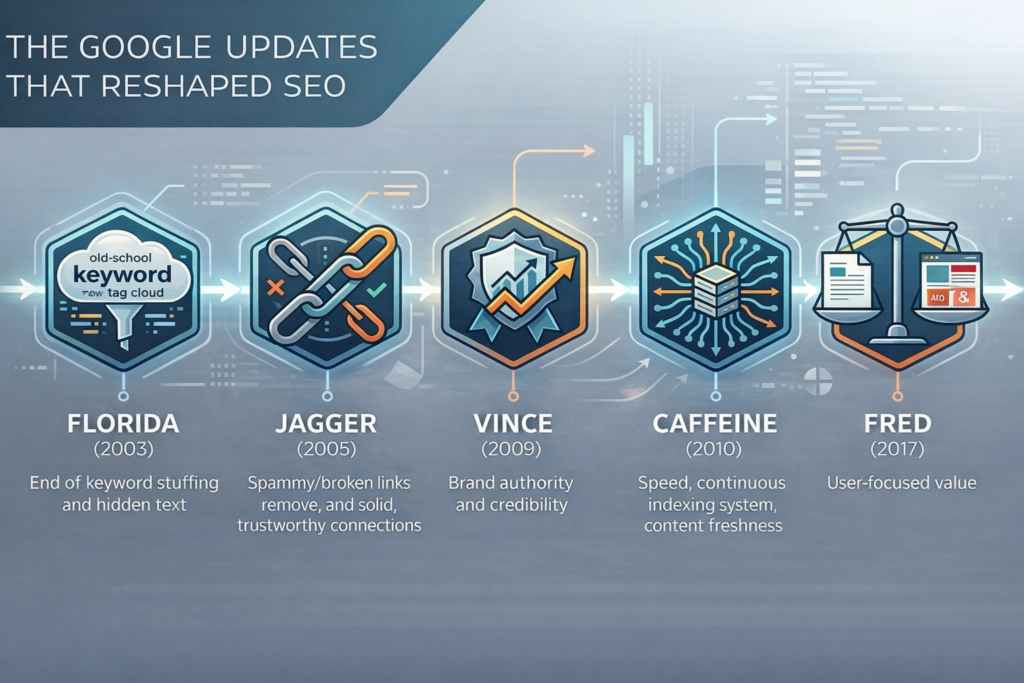
In digital marketing, Google’s search algorithm has gone through continuous transformation to improve the quality, relevance, and trustworthiness of search results. Over the years, several major updates have significantly influenced how websites rank. Among the most impactful are Florida (2003), Jagger (2005), Vince (2009), Caffeine (2010), and Fred (2017).
Each of these updates addressed different weaknesses in the search ecosystem — from keyword manipulation to backlink spam and low-value content. Together, they helped shape modern SEO into a more ethical and user-focused practice.
Table of Contents
Florida Update (2003)
Jagger Update (2005)
Vince Update (2009)
Caffeine Update (2010)
Fred Update (2017)
Common Patterns Behind These Updates
Final Thoughts
Florida Update (2003)
The Florida Update marked one of the first major disruptions in the SEO industry. Released in November 2003, it dramatically altered search rankings and caught many website owners off guard.
At the time, ranking strategies often revolved around excessive keyword repetition and hidden optimisation tactics. Websites could manipulate search visibility by stuffing keywords into pages without focusing on actual content value.
What it targeted:
Keyword stuffing
Hidden text and invisible elements
Over-optimization of on-page content
Low-quality affiliate websites
The update significantly reduced the effectiveness of manipulative keyword strategies.
Key takeaway:
Search engines prioritise meaningful, relevant content. Optimisation should enhance user experience rather than attempt to exploit algorithm weaknesses.
Jagger Update (2005)
Two years later, Google introduced the Jagger Update, which focused primarily on link quality. During this period, backlinks were heavily abused. Many websites purchased links or participated in link exchange networks to artificially inflate authority.
Jagger aimed to clean up link spam and evaluate backlinks based on trust and relevance rather than sheer quantity.
What it targeted:
Paid links
Link farms
Excessive reciprocal linking
Unnatural backlink profiles
Websites that depended on questionable link-building methods experienced ranking drops, while sites with genuine, authoritative links benefited.
Key takeaway:
Backlinks should be earned through credibility and value. Sustainable SEO relies on trust, not shortcuts.
Vince Update (2009)
The Vince update shifted attention toward brand authority and credibility. After its rollout, well-established brands began appearing more prominently in competitive search results.
This change reflected Google’s growing emphasis on trust signals and domain reputation. Established businesses with strong online presences and recognition gained visibility advantages.
What it emphasised:
Brand credibility
Domain authority
Trustworthiness
Business legitimacy
Although smaller websites could still compete, brand recognition became an important ranking factor, particularly for high-value queries.
Key takeaway:
SEO is not just technical — it also involves reputation building. Strong branding and trust signals contribute significantly to long-term ranking stability.
Caffeine Update (2010)
Unlike earlier updates that targeted spam, Caffeine was a structural upgrade to Google’s indexing system. It improved how Google processed and stored information.
Before Caffeine, search results were updated in layers. After the upgrade, Google could index new content continuously, allowing fresher information to appear more quickly in search results.
What it improved:
Faster indexing
Real-time content updates
More current search results
Websites that regularly published new content gained an advantage because their pages could be indexed and ranked more rapidly.
Key takeaway:
Consistency in content publishing increases visibility. Fresh, relevant updates help maintain search performance.
Fred Update (2017)
The Fred Update focused on content quality and user experience. It primarily targeted websites built mainly for advertising revenue rather than genuine value.
Many affected sites had thin content, excessive ads, and articles created solely to generate clicks.
What it targeted:
Low-value content
Ad-heavy layouts
Over-optimized affiliate pages
Content created primarily for monetization
Websites that prioritised user experience and informative content were less affected.
Key takeaway:
Content must serve the reader first. Monetisation should not compromise usefulness, depth, or quality.
Common Patterns Behind These Updates
Although released over many years, these updates share a consistent goal: improving search quality and reducing manipulation.
Florida addressed keyword abuse.
Jagger reduced link spam.
Vince reinforced trust and brand authority.
Caffeine enhanced content freshness.
Fred eliminated low-quality, ad-driven pages.
Each update moved SEO toward a more sustainable and user-centred approach.
Final Thoughts
The evolution of Google’s algorithm sends a clear message: quick fixes in SEO rarely deliver lasting results. Techniques designed to exploit ranking systems may work temporarily, but they often lead to penalties when updates roll out.
Modern SEO success depends on:
Valuable and informative content
Ethical link-building practices
Strong brand credibility
Consistent content updates
A focus on user experience
Understanding these major updates helps marketers avoid outdated strategies and build long-term search visibility. Ultimately, businesses that align their strategies with user needs and trust principles are the ones that achieve sustainable growth in search rankings.